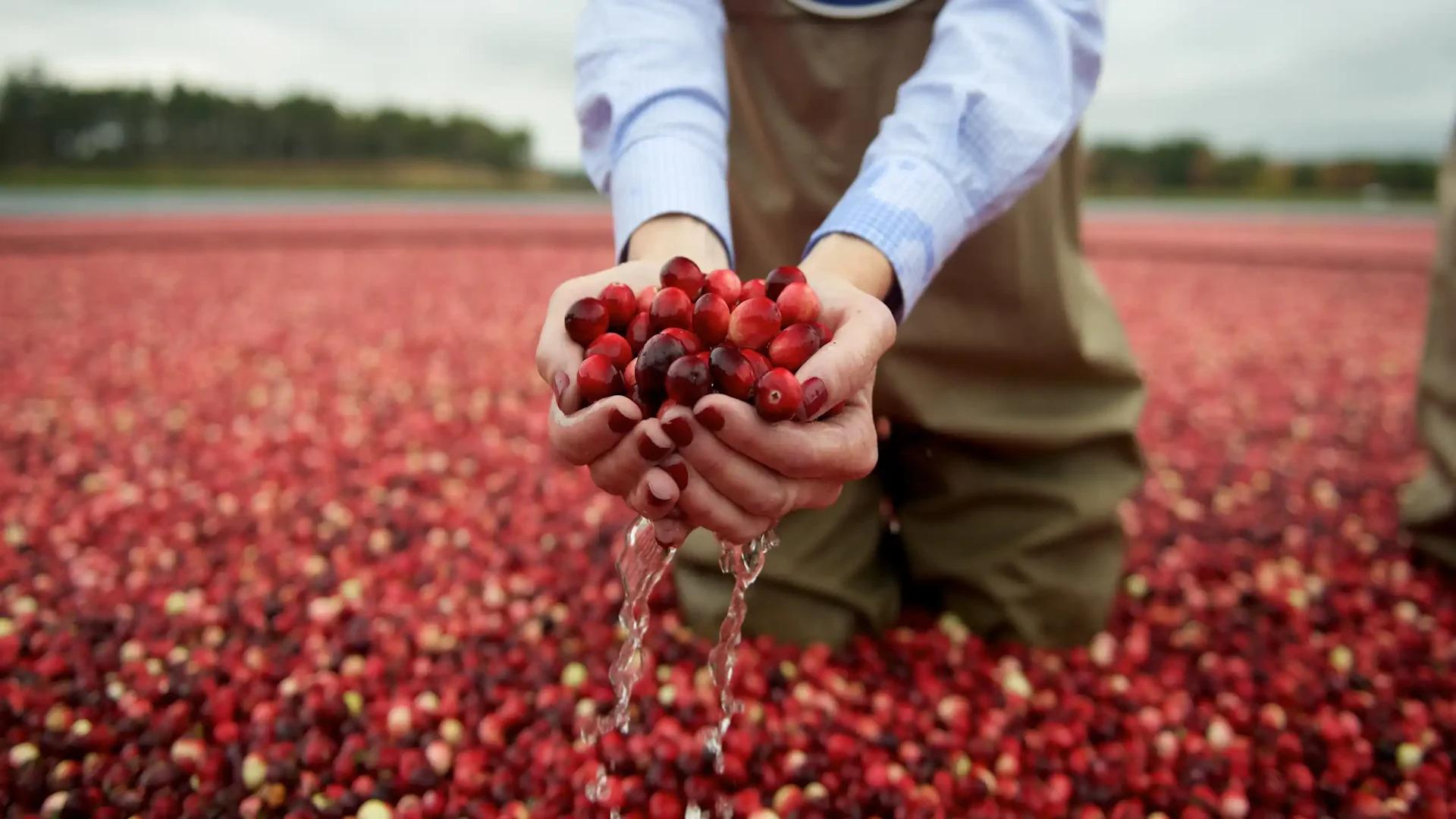
When you say Ocean Spray, you say cranberries. What started in 1930 as a collaboration between three cranberry growers has, nearly a century later, grown into a global, farmer-owned cooperative of more than 700 farming families. Today, Ocean Spray is an internationally recognised brand, bringing cranberry-based products to consumers across markets worldwide.
Same packaging, different market realities
Operating across countries means operating in very different contexts. In Belgium and the Netherlands, Ocean Spray faces a particularly complex situation. Given the relatively small size of both markets, the brand opted for a single distributor serving both countries. As a result, the packaging format was also aligned: a traditional PET (Polyethylene Terephthalate) bottle.

From an operational perspective, this set-up made perfect sense. Over time though, Ocean Spray began to question whether it was still the right approach. While the brand operated with one packaging format, the retail reality in both countries increasingly diverged.
In Belgium, PET bottles remain a common sight in the juice aisles. In the Netherlands, the shelves tell a very different story. As brand manager Elsa Trignac explains: “When you go to the juice aisle in any given Dutch store, you’ll see an ocean of carton. Only Ocean Spray and private label drinks are sold in PET bottles.”
On top of that, in the Netherlands PET bottles are subject to the mandatory deposit return scheme, increasing the visible price at the point of purchase. While refundable, this deposit makes the brand appear more expensive compared to carton-packed alternatives.
This combination of shelf context and pricing perception prompted Ocean Spray to reconsider its packaging strategy. Would switching to carton be beneficial for the brand and help boost sales? And should this change be rolled out across both Belgium and the Netherlands, or would it require a more fundamental rethink of the brand’s operational model, with different pack types per market?
When assumptions aren’t enough
Commercial and operational teams all brought valid perspectives to the table. What was missing, however, was the consumer’s voice. “We quickly realised we couldn’t base this decision on logistics and pricing considerations alone. We also needed to understand the potential impact on brand perception”, explains Elsa Trignac.
For a brand that has been on shelves in PET bottles for over 20 years, changing pack types was far from a neutral decision. The risk was not purely financial or operational, but also reputational: one misstep could undermine brand recognition, trust and willingness to pay.
Grounding strategic decisions in consumer insight
To bring the consumer perspective into the decision-making process, Ocean Spray chose to work with boobook. “A key factor was boobook’s ability to run a fully integrated research project across both Belgium and the Netherlands, while delivering one coherent set of recommendations”, says Elsa. “Equally important was their combined expertise in qualitative and quantitative research. While most agencies are specialised in one or the other, boobook was able to run both in-house, in a phased approach.”
The qualitative one-on-one interviews provided a deep understanding of consumer motivations and attitudes towards both PET and carton packaging. These conversations added context to the quantitative findings and proved essential in refining both the questions and the materials used in the quantitative phase.
One example: an initial pack design concept was rejected during the qualitative research, prompting immediate adjustments before moving into the quantitative phase. As a result, the concept tested at scale was better aligned with consumer preferences.
Pinpointing the profit-maximising price
During the quantitative phase, over 500 Belgian and 500 Dutch shoppers evaluated the carton concept, enabling Ocean Spray to answer four critical questions:
- Would the new carton pack still be recognised as Ocean Spray?
- Could the packaging change drive additional purchase?
- What would be the optimal price point?
- How would the change impact brand image?
Boobook’s Competitive Price Pulse (an advanced Gabor-Granger pricing exercise) was used to determine the optimal price point. Both the existing PET bottle and the carton concepts were evaluated at multiple price points within a competitive shelf context. This approach made it possible to forecast both consumer interest and revenue potential at each tested price level.
An unexpected result
The research revealed that, despite the apparent logic of shelf context, consumers’ expectations were deeply shaped by familiarity and habit. Packaging changes would have required significant price reductions to drive volume, particularly in the Netherlands, with potential consequences for the brand’s premium positioning.
In the end, Ocean Spray decided to stick with PET bottles in both Belgium and the Netherlands. “Decision-making was very easy thanks to boobook’s clear presentation. The slide deck was short and focused. With so much data across two countries, it would have been easy to get lost. Instead, we received very clear recommendations.”
The value of not changing course
By investing in research upfront, Ocean Spray avoided costly assumptions and prevented a chain of decisions that could have resulted in significant financial loss and long-term brand impact.
“Apart from the PET versus carton decision, the project also provided reassuring insights into our brand perception and pricing in general, which was particularly valuable as we don’t often get the opportunity to speak directly with consumers in Belgium and the Netherlands.”
Ultimately, the project reinforced the value of pausing before acting, and of using consumer insight not only to validate change, but also to justify staying the course.


